Showing posts with label Permaculture. Show all posts

Monday, June 1, 2015

Star Shine Salad...Two Weeks Until CSA Launch

Our Star-Shine Salad Picked Yesterday

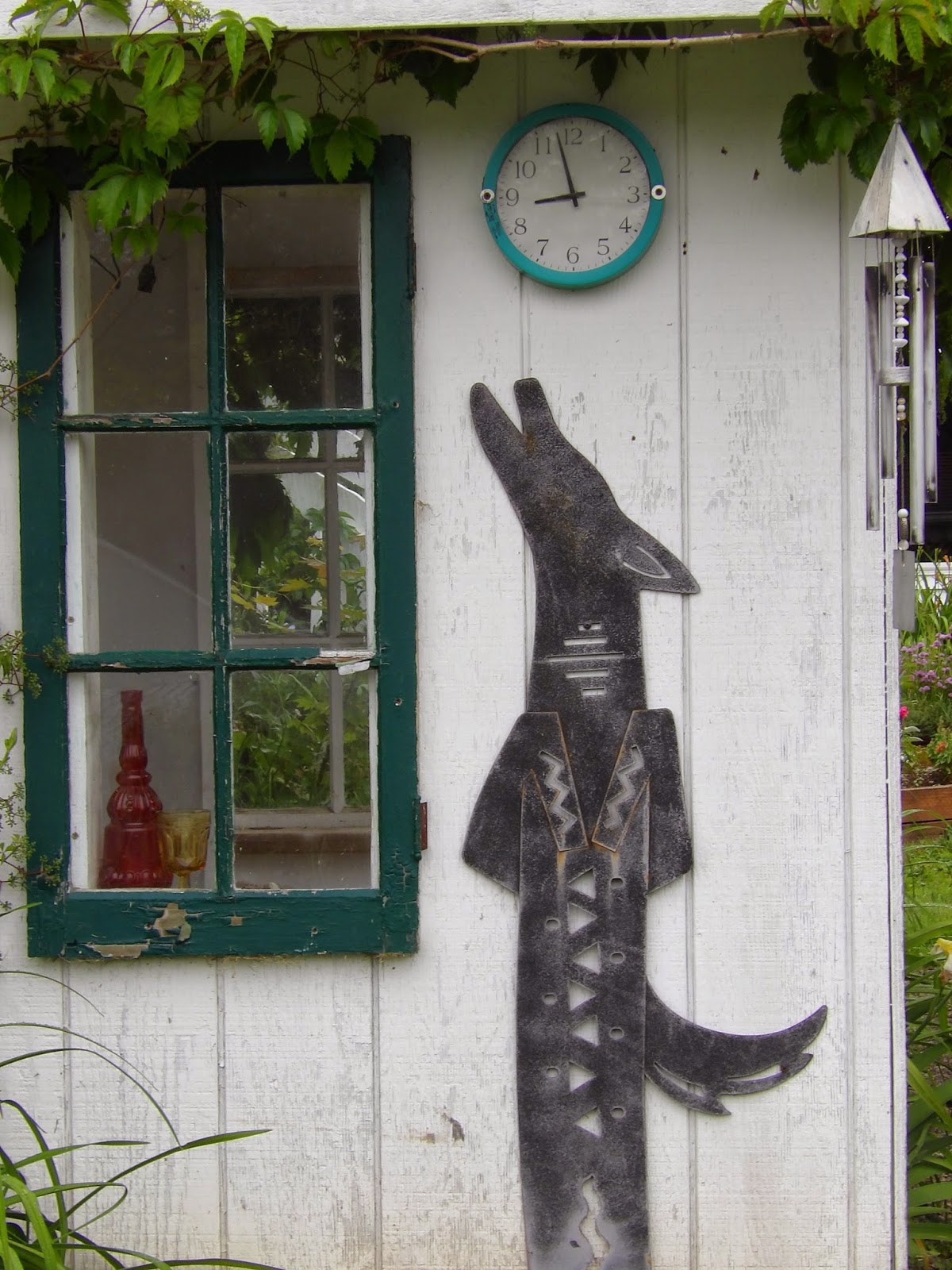
Mailbox for garden tools in Heather's garden
 Hello Moon Bears,

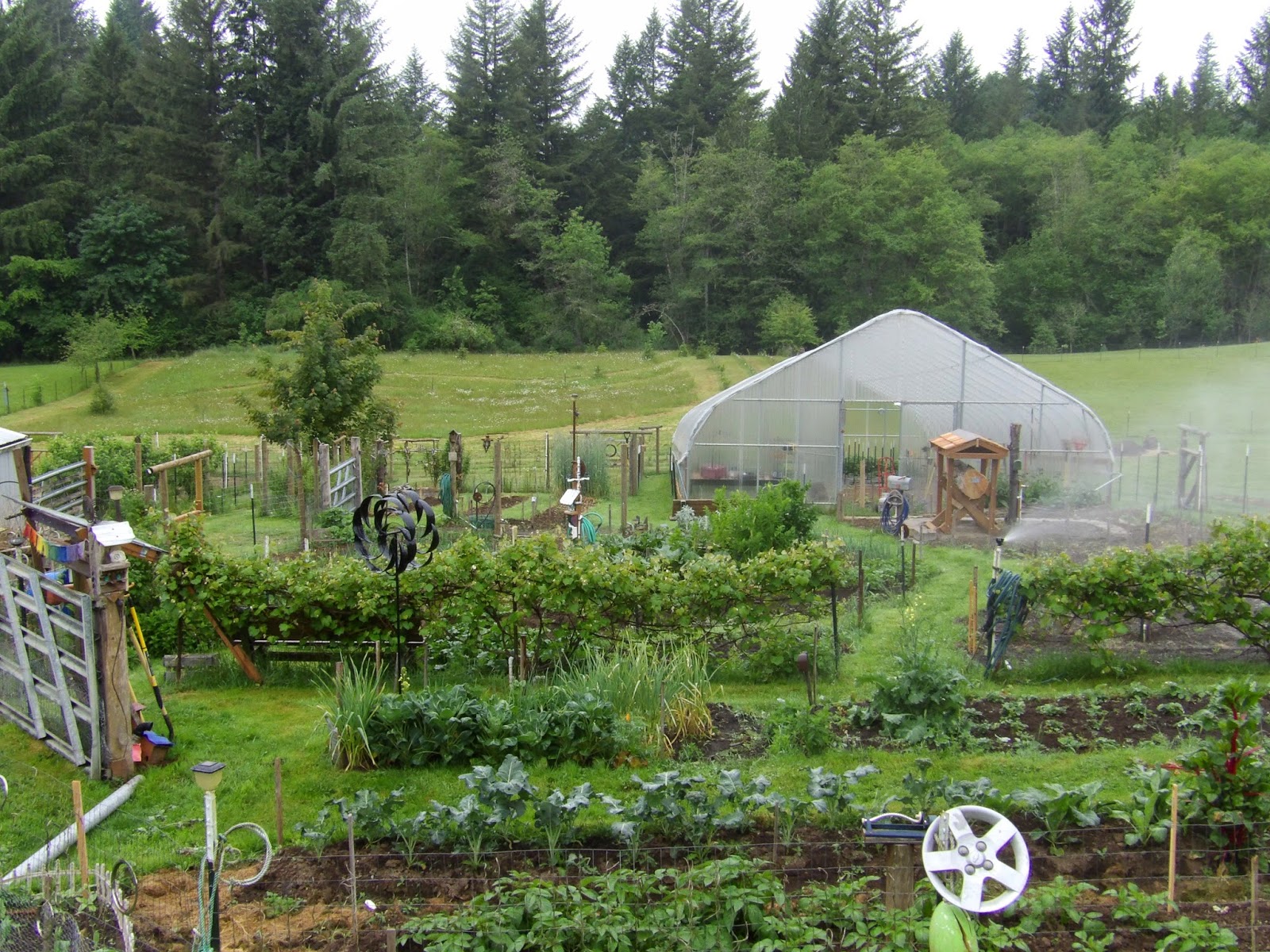
A welcome rain today, finally.  Thought I'd pass along a few photos of our week on the Art Farm. Looks like two weeks until the CSA Summer 2015 launch. Our membership is full now. More than 15 wonderful members signed up. Thank you!!

Today we begin planting the second succession of crops in the south field. When the first garden runs thin in August the second will kick in. Also, the greenhouse has tomatoes already and a few golden zucchini.

See you in a couple of weeks.
Rick
Me and Callie the Farm Cat
Singin in the flowers
The Art Farm Flag


(c) Copyright Moon Bear Produce, Rick Sievers, June 2015

Wednesday, May 27, 2015

June Bloom - Deliveries Start June 18th

 The North Garden in Mid May 

Karakovan Style Hive

Hello Moon Bears,

Looks like we will start deliveries on Thursday June 18th. We have a lot of new kale right now if anyone wants to cut some themselves. We also have two spots available for our CSA (See the last entries for details).

You can see how green everything is. This time of the work year is sort of like riding a runaway truck with no brakes. The weeds and the sprouts and the bugs and the soil preparation and the promotion happen all at once. Just hang on and do as much as you can.

Potatoes are nearly two feet tall, with little 1 inch spuds hidden in the pile beneath. Broccoli is growing heads. The bees are swarming around the bolted kale and radishes. And the Caraflex cabbages have the cutest cone heads you've ever seen.

We listened to your feedback from last year. So this year we are planting more salad greens in succession. Also, our  onion crop is twice the size and variety as last year. So far the winter squash looks good too. We'll try to never repeat our 50% loss from vine borers last year. We rotated our squash patch far away from the infected areas. Keep your fingers crossed. Control is not an option in a true organic garden. One can only rely on patience and presence and practice With the Earth as partner.

We also installed our first beehive. This is an old time design made with a hollow cottonwood log. It's primary purpose is home for the bees, a round sanctuary. Its a modified Karakovan hive and it also is akin to many African designs. See these links for more details: Karakovan & Stellar Bees. We also have a nice patch of milkweed for the Monarch Butterflies we saw last year.

We're so looking forward to seeing you this Summer, with coolers full of living, lovely produce.

Rick

(c) Copyright, Words and Images, Moon Bear Produce, Rick Sievers, May 2015


Wednesday, April 29, 2015

Green and Hopeful Seedlings

Removing the cover crop before planting.

Onions being planted
 Hello Moon Bears,

Spring has arrived in waves of heat and rain. The land is fertile and endorsing the loveliness of the green and hopeful seedlings. We've planted spinach, onions, kale, chard, lettuce, garlic, brussel sprouts. The seedling greenhouse is full of summer and winter squash, tomatoes, broccoli and a flat of milkweed for the butterflies.

It's not too late to reserve your spot for the Summer Season Veggie Subscription Service. Only $340 for farm pick-up, $400 delivered right to your door and $175 for 1/2 share (farm pick up only). Check out the previous blog entries for more details.


Tools: Hand, Sharpie, trowel, mini-seeder, mallet and big seeder plates.

Tomato Seedlings

Greenhouse tilled, staked and ready for drip irrigation.


 Looks like the Summer deliveries will start about June 18th. Off course the Earth and weather have the final say when the first harvest begins.

Rick and Heather
(three six zero) 904-four three two one


The Upper Garden

Rick with the Earthway Seeder
See you in the garden.

These beds won't be bare for long


(c) Copyright, Words and Images, Moon Bear Produce, Richard Sievers, April 2015

Wednesday, August 27, 2014

Purplepalooza- Week 11 of the Moon Bear CSA

Seedless Concord Grapes Growing Outside Our Kitchen Window
Hello Moon Bears

New visitors have offered themselves to your CSA box this week. A cornucopia of amazing species.
And a few of your favorites. I'm reminded again and again how generous the Earth is to Her children, how gracious with Her offerings and how little She asks in return. To remind us of nature's wonder, a bear wandered down our road this week, munching on the blackberry vines and leaving a "calling card" at the bottom of our driveway. Even the bear likes purple food...

On Your Menu this Week for a full share:
  • Fairy eggplant (Not every box will get them this week. We need more ripening time for the rest next week)
  • Purple Hawaiian Bell Peppers
  • Salad Mix (Last of the lettuce this season)
  • Crimson Chard
  • Detroit and Ruby Queen Beets
  • Lemon and Armenian Cucumbers
  • Sweet Corn (For the 1st five boxes this wk., then for the rest next week)
  • Luscious, Luxurious, deLicious Seedless Concord Grapes (Fruit of the gods)
  • Chocolate, Red and Grape Cherry Tomatoes.
  • Heirloom Slicing Tomatoes
  • Baby Turnips
  • Trio of Beans
  • Fingerling Potatoes
 Thanks for Believing in Local Sustainable Agriculture.

See You in the Garden
Rick


(c) Copyright Rick Sievers, Moon Bear Produce, August 2014

Thursday, January 30, 2014

Shallow vs. Deep Organic


Tree Frog early morning sun bathing on the summer rhubarb.
Moon Bear is attending the Washington State Farmer’s Market Association (WSFMA) convention this weekend in Vancouver. I was asked to bring promotional materials for the entry display. I asked myself: “What could I promote that would be of interest to my customers?”  I remembered how one question comes up all the time when I sell at the Salmon Creek Farmer’s Market: “Are you an organic farmer?”

The simple answer is “YES, most definitely.” And most people are satisfied with that. Then I saw that customers asked the same question to every produce vendor. It seems that nearly every farmer says Yes, just like me. And I wondered what it really means to call yourself “Organic”? Technically, the law says that I can say I’m organic without certification if I make under 5,000 dollars a year in sales of produce and I follow the law re. organic standards. But that’s the easy answer, and really a cop out. 

What does organic mean? Is it being “Certified Organic”? Yes, partly. And being certified is a Huge step above the agri-industrial complex’s idea of pseudo-food. But there are many variables on the spectrum of being organic.  If a customer asks more, I say that “I am not certified organic, (yet) but I grow in the organic method.” Then I say that being an organic producer means more about how I treat the land and beings on my farm. Looking around the market I wonder how many farmers fudge the truth or actually believe they’re organic when they are not?

All I can say is “Come out to our farm. See how we care for the land and plants and bugs and animals.” We’re a business. But we are also stewards of our particular patch of Earth. Being deeply organic is not just about never using forbidden synthetic fertilizers and other crop inputs. It’s about co-creating with the living soil and diverse plant population. It’s science, art and lifestyle.
Native bees are Important Pollinators

I want to educate the consumer about organic, starting with not just believing the label or the farmer’s proclamation that they are organic. 
It’s not just about what the farmer does Not do in the production of food. It is also about their proactive stance in building up the vitality of their farm. Healthy soil and habits equals healthier plants and tastier food.

So when someone tells you that they produce organically, think about shallow vs. deep farming practices. Think twice when someone reflexively says “Yes, I grow organically.” 

I encourage you to ask the farmer some hard questions:
-What does the term organic mean to the farmer? 
-How does their practice build the diverse fecundity of the soil while protecting the watershed and the creatures on the land?
-Is the farmer willing to show you the farm and her/his agricultural practices? 

-Is the soil alive?
-Is the food grown in a vital, conscious manner? 

Here’s a basic list of what I consider to be the differences between shallow and deep work with the earth.

Shallow Organic Farming:
- Reacts to issues in the garden such as pest infestation and soil infertility.

- Mimics the agri-industrial complex by using synthetic substitute fertilizers and pesticides as palliative measures.
 
- Views the land solely as a resource for crop production, akin to a factory.
 
- Manages the land, crops and inputs with a mindset of maximum production.

- Uses a one size fits all approach to soil fertility.

- Uses mono cultures and hybridized seed sources.

- Book learning. A mindset of “this is the way we’ve always done it.”

- Grows same plants in same place every year.

- Works and plans alone.
Deep Organic Farming:

- Works with the soil by observation and study to support a living, diverse and fertile ecosystem. Views pests as messengers instead of foes.

- Is proactive and nurturing in the stewardship of the living earth. Uses fertility inputs directly from the land when at all possible, such as green manures and homemade compost.

- Views land a co-creator and teacher. See the larger view of the entire farm ecosystem. Creates a vision statement for your farm.

- Leaves room for wild areas. Creates pollinator habitat. Rotate cover crops. Allows areas to go fallow for a season. Creates a business plan.

- Considers what you are growing and what the particular crop needs for maximum health.

- Diversifies. Plants more than one species when possible. Companion and multi-story planting.

- Learns from the plants and the soil. What do the weeds and pests and health of the crops tell you?

- Has a crop production and rotation plan and sticks to it.

- Allows community to infiltrate the structure of the farm and soil with gratitude and shared vision and good honest work.  

Thanks,
See you at the markets this summer.
Rick

(c) Copyright Rick Sievers, January 2014, All Rights Reserved